Research-first content for an LLC formation publisher
17 pages. 7 weeks. Every claim checked against the official source or the provider’s own checkout.
Client: Persuasion Nation (Khris), an established US publisher of LLC formation and registered agent guides, rebuilding its site to publish fewer, better pages. Role: senior research writer and editor. September to November 2026.
The problem
The site’s pages were long and confident, and a lot of what they said had expired. One flagship comparison page was 7,770 words, still said “2024” in its first heading, and ranked providers without showing what any of them actually cost. Like most pages in this niche, it repeated pricing and legal claims that other sites had already copied from each other.
The owner wanted the opposite: pages that a careful reader could check line by line.
What I did
Read the primary sources. Secretary of State fee schedules and filing instructions, state statutes, IRS and FinCEN guidance, state tax agency publications, and county clerk designations. Each claim went into a source log with the URL, the exact wording and the date checked.
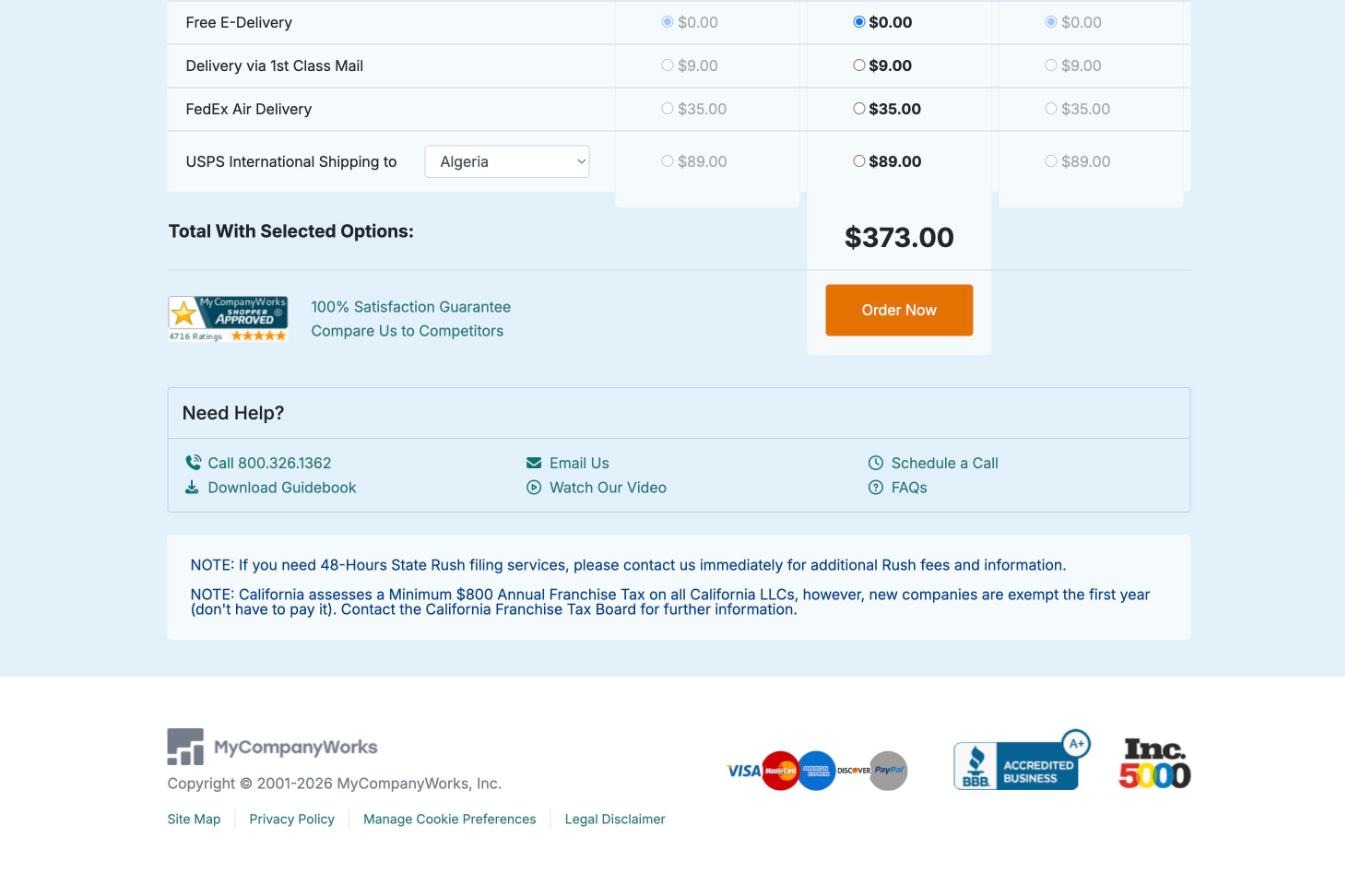
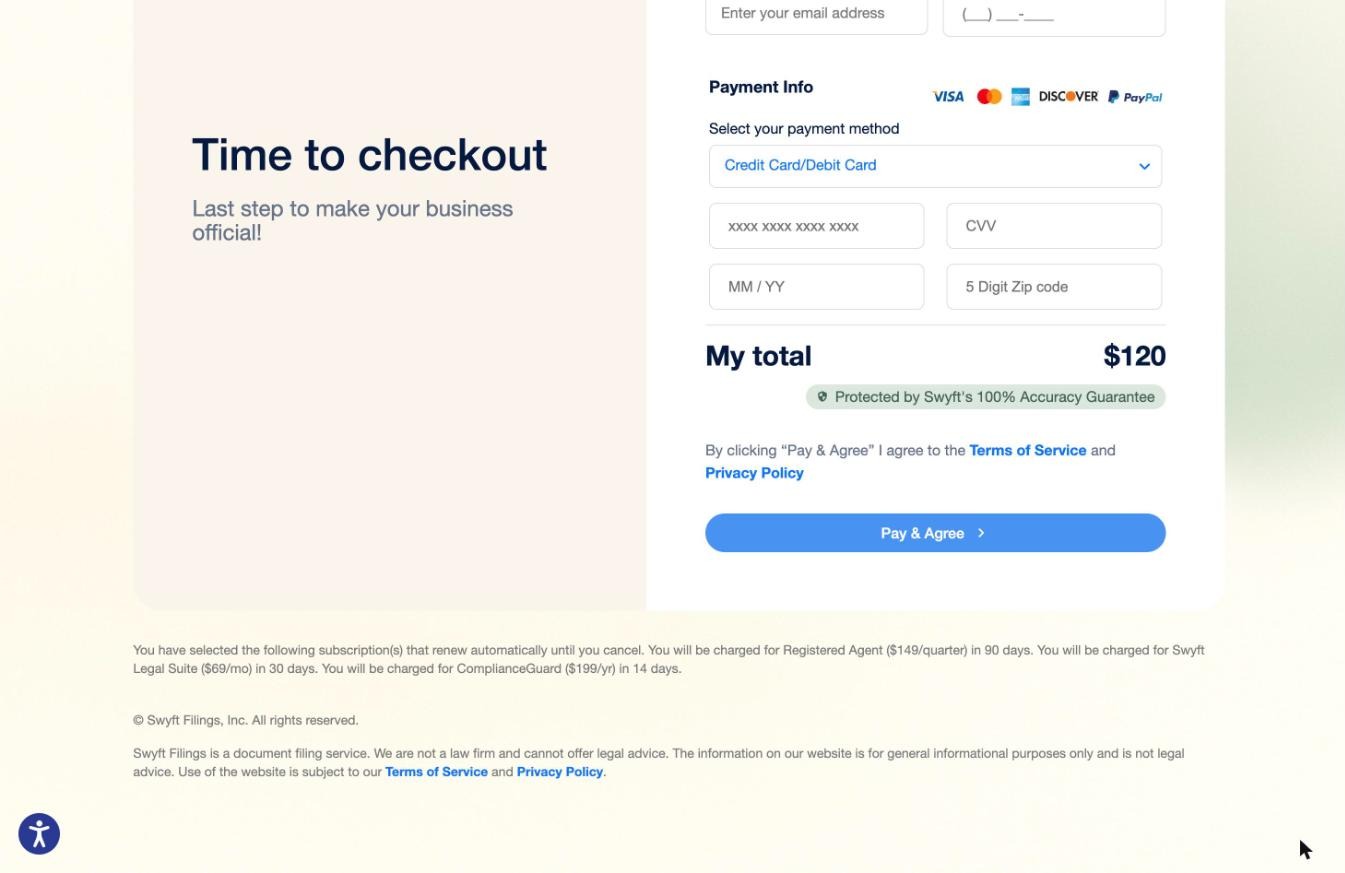
Walked the checkouts myself. For comparison pages I went through each provider’s order flow to the payment step, recorded what was preselected, what renewed and when, and captured desktop screenshots as evidence.
Tested support. I sent the same questions to each provider and recorded who answered, how fast, and whether the answer was right.
Did the math. First-year and three-year cost baskets, with every assumption stated, so the ranking rests on numbers a reader can reproduce.
Documented every change. Each revision round shipped with a change log, an evidence folder and a short list of anything still unconfirmed, with what would settle it.
What the research turned up
These are the kinds of details that separate a page you can trust from one that sounds right:
A provider’s own pages disagreed with its checkout. One service charged a $75 “California State Fee” at checkout. California’s fee is $70, and the provider’s own California filing page also says $70. Its support team replied that the state charges $75. The $5 gap is unexplained.
An expired tax claim still on a checkout page. One provider’s California order page still told buyers that new LLCs skip the $800 annual tax in year one. That first-year exemption covered tax years beginning 2021 through 2023, so an LLC formed in 2024 or later owes the $800.
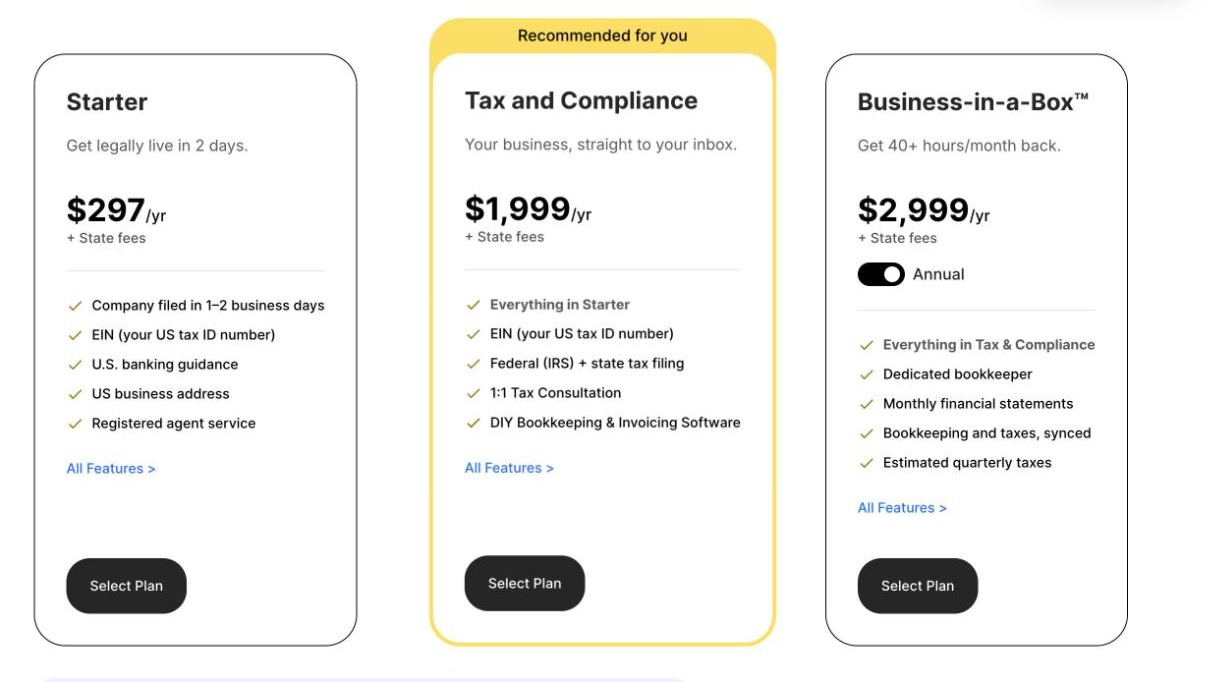
Prices that changed mid-project. One provider’s plan went from $197 a year to $297 a year in the same signup flow within nine days. Another stopped forcing buyers into its registered agent. I rechecked the checkouts before delivery so the pages matched what a reader would see.
Hidden recurring charges. One “low cost” option added a registered agent at $149 a quarter, a legal plan at $69 a month and a compliance plan at $199 a year, each billed weeks after the order.
Same notice, very different prices. New York requires new LLCs to publish a notice for six weeks. Two Manhattan papers quoted $275 and $691 for the same notice. I collected written quotes from five papers and labeled each one as a firm quote or an estimate.
Official sources that contradicted each other. Texas’s franchise tax FAQ used a $2,470,000 threshold in an example where the Comptroller’s own rate table gives $2,650,000. I followed the table and noted the conflict on the page.
Errors nobody had flagged. While revising an operating agreement guide for one state’s error, I found the same mistake for Delaware and corrected it.
What changed
A 7,770-word page became about 4,400 words, 43% shorter, with more primary evidence: 11 checkout walks, support tests sent to 11 providers and 51 evidence screenshots.
Rankings moved where the evidence said they should. A provider ranked #2 on the old page moved to “skip,” because it showed no registered agent price before payment. A provider ranked #11 moved to #3 for the lowest upfront cost.
Common industry claims were corrected, including outdated beneficial ownership (BOI) filing advice, paid “expedite” add-ons in a state where online filings are already approved immediately, and the fact that an EIN is free from the IRS.
17 pages in total: state cost guides (California, New York, Texas), “best LLC service” comparisons, a cheapest-filing comparison, provider reviews, a 50-state filing fee table, and guides to operating agreements, foreign LLC registration and LLCs for non-US residents.
What an audit alone would have flagged
This engagement was a rewrite, not a standalone audit. A standalone audit of the old pages would have returned a dated list of fixes, each with its source: the “2024” still in the flagship page’s first heading, rankings with no cost behind them, outdated BOI filing advice, paid “expedite” add-ons in a state where online filings are approved immediately, and claims about what an EIN costs. The checkout walks, support tests and rewriting were separate work on top of that list. See the Fact-Check & Source Audit.
Published work
Researched and written by me, with final edits by the client. Some pages carry the site founder’s byline.
- How to Start an LLC in Florida
- LLC Filing Fees by State
- Best LLC Services in Texas
- Best LLC Services in Ohio
- Best LLC Services in Florida
- Best LLC Services in New York
- Northwest Registered Agent Review
- Northwest Registered Agent Discount
Eight more guides (California, New York and Texas cost guides, California and cheapest-service comparisons, operating agreements, foreign LLC registration, and LLCs for non-US residents) were delivered in November 2026 and are awaiting publication.
How I work
- Official sources first. Secondary sources are labeled as secondary.
- Every price is dated, because prices change.
- If I can’t confirm something, the page says so, and I tell you what would confirm it.
I apply the same checks to my own publication, Hidden Systems. What happens to an LLC when the owner dies is a recent example, with the state statute and federal regulation cited.
Work with me
I take on a small number of research-heavy content projects in regulated or high-stakes topics: business formation, tax and compliance, legal and financial explainers. If your pages need to be right, not just readable, get in touch. Or see the Verified Page service and the sample delivery pack.